CHEMEMAN PUBLIC COMPANY LIMITEDSET: CMAN🇹🇭 TH

Risk Management · 2025

Risk Management Policy & Plan

Policy & Plan Description

2.1 Risk Management Policy and Plan

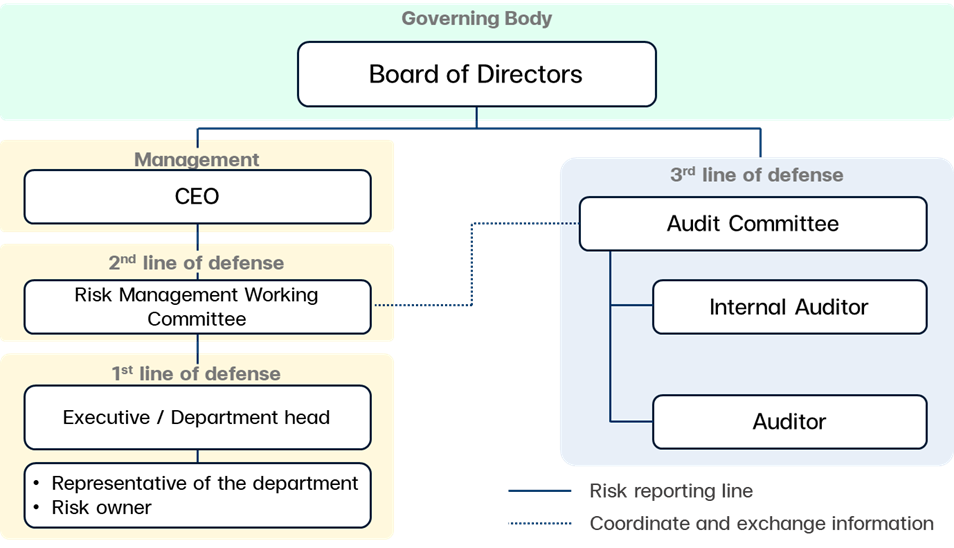
Chememan Public Company Limited and its subsidiaries (the “Group”) recognize the importance of risk management as a key factor to achieve its business goals. The Board of Directors has established a risk management policy as a guideline for risk management practices. (The Company has published the full version of its risk management policy on its website at www.chememan.com)

Risk Management Structure
No.

Related Persons

Duties and Responsibilities

1

Board of Directors

  • Establishes policies and oversees risk management

2

Chief Executive Officer

  • Allocates resources and budget to support effective risk management

  • Monitors key risks across the organization, including emerging risks, and ensure mitigation plans are in place

  • Creates a proactive risk management culture by promoting employee engagement in risk-related activities

  • Establishes a risk management working committee and report to the Board of Directors

  • Reports key risks and risk management activities to the Board of Directors and stakeholders at least once a year

3

Risk Management Working Committee

  • Defines the risk management framework and processes to align with the Group’s strategic objectives and ensure risks remain within the acceptable thresholds (“Risk Appetite”)

  • Analyzes and monitors changes in the business environment and risks factors that may require a review or adjustment of existing risk management initiatives

  • Reviews the Company’s key risks and ensure that all business units continuously implement risk management practices in accordance with the Group’s risk control framework and strategic direction

  • Reports key risks and action plans to the Chief Executive Officer, and the Board of Directors, respectively

  • Ensures the Risk Management Manual is developed, updated, and reviewed regularly to align with the Company’s risk management policy

  • Promotes awareness and encourages employees to enhance their knowledge and understanding of risk management and its importance to the organization

4

Executive / Department Head

  • Leads and oversee risk management within their respective departments, as well as manage resources to achieve the Company’s objectives

  • Reviews and approves risk management measures implemented within their departments

  • Assigns a risk owner within the department to manage and monitor risks

  • Reports the performance of risk management against the established plans, including actual performance, and future actions, in alignment with the company’s objectives to the Risk Management Working Committee

5

Risk owner

  • Identifies, analyzes, assesses, and prioritize risks within their areas of responsibility

  • Develops appropriate risk mitigation measures, seek approval, and implement the approved actions

  • Reports the results of risk management activities to the department executives and/or the Risk Management Working Committee

6

Audit Committee

  • Governs, monitors, and reviews the adequacy and effectiveness of the internal control systems to ensure risks are appropriately managed across mitigate risks throughout the Group

  • Reports on the effectiveness of its internal control systems to the Board of Directors, Audit Committee and Shareholders

7

Internal Auditor

  • Conducts independent assessments and evaluations of operational control processes through internal control audits

  • Reports its audit results to the Audit Committee

  • Communicates the Audit Committee’s comments and recommendations to the audited departments and/or responsible staff for further improvement and development

The Risk Management Working Committee comprises executives from key business functions, including Strategy, Commercial, Technology, Operations, Finance & Accounting, People Management Development, and Compliance. The Chief Strategy Officer serves as the Chairperson of the Committee. In 2025, the Risk Management Working Committee convened to review key enterprise-wide risks, risk appetite, risk assessment criteria (Likelihood and Impact), risk prioritization using the Risk Matrix, and risk mitigation plans. The findings and recommendations were subsequently presented to the Chief Executive Officer and the Board of Directors.

Risk Management Process and Tools

Risk Level Classification

To enhance efficiency, ensure comprehensive coverage, and align with the company’s risk management framework, risks are classified into three levels as follows

No.

Risk level

Person in charge

Director

1

Enterprise Risk refers to risks that may significantly impact the achievement of the Group’s strategic objectives, sustainability goals, financial stability, and overall corporate reputation. These risks are considered highly significant and require oversight by the Board of directors and senior executives.

Board of Directors /

C-level Executives

Board of Directors / Risk Management Working Committee

2

Functional risk refers to risks occurring at the department or functional level, which may affect the achievement of the respective department’s objectives and may also be linked to or impact enterprise risks. The department is primarily responsible for managing such risks.

Managers / Department Heads

Business Line Executives

3

Operational Risk refers to risks arising from day-to-day operations or activities. These risks may develop into the root cause of risks at both the functional and enterprise levels If not properly controlled.

Supervisors /

Process Owners

Line Managers / Department Heads

In the risk management process (comprising risk identification, risk assessment, and risk mitigation), each level is carried out according to the defined roles and responsibilities. This ensures that risks are properly controlled and that significant risks are escalated for consideration at higher management levels in accordance with the organization’s established criteria.

Risk Identification

Risk identification involves recognizing risks and uncertainties, both external and internal, that may impact the ability of the Group, business units, or departments to achieve their objectives. Risks are categorized into 5 key areas as follows:

  1. Financial and Investment Risk

  2. Strategic and Market Risk

  3. Operational Risk

  4. Environment and Social Risk

  5. Legal and Compliance Risk

Risk Assessment

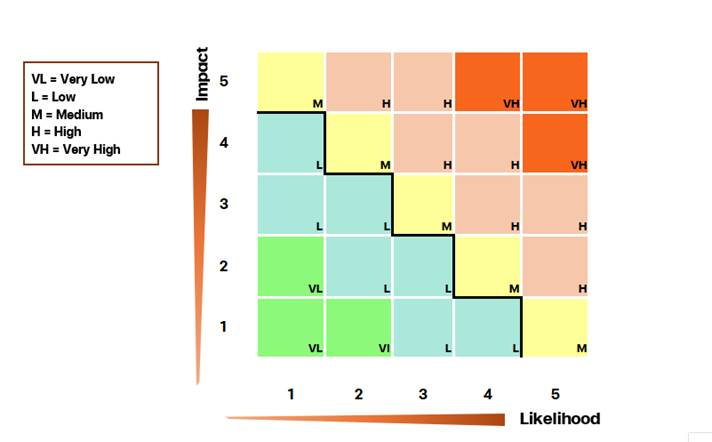
The Group establishes its Risk Appetite, which represents the level of risk the organization is willing to accept in pursuing its objectives. Risks are assessed using a Risk Map in the form of a 5x5 Risk Matrix, which evaluates risks based on two key criteria: the likelihood of occurrence and the severity of impact. The likelihood is classified into five levels, and the severity of impact considers various dimensions, including financial impact, production impact, operational processes, environmental and social impact, legal implications, and corporate reputation. Each impact category is further classified into five levels of significance: very high risk, high risk, moderate risk, low risk, and very low risk.
A diagram of a diagramAI-generated content may be incorrect.

Risk Mitigation Plan

Risk management action plans are developed to control risks within acceptable levels (“Risk Tolerance”).

Risk Monitoring and Reporting

The monitoring process is planned to conduct by establishing Key Risk Indicators (“KRIs”) for each identified risk. The risk owners are responsible for reporting their KRI results. If any irregularities are detected, immediate mitigation actions must be taken. In cases where mitigation is not feasible, the issue must be escalated to management or the appropriate working committee as per the organizational structure.

Policy Document Link

https://www.chememan.com/storage/document/cg/risk-management-policy-en.pdf

Page Number in Report

1

Risks to the Company's Business Operations

Introduction

In 2025, Chememan identified and assessed key risks for the Group and established a risk mitigation plan as follows:

Risk Register

Risk NameRisk CharacteristicsConsequencesManagement MeasuresRelated Risk Factors
Foreign exchange risk

The Group has foreign currency exposure in US Dollars, Australian Dollars, and Vietnamese Dong due to the following factors:

  • Operations in Thailand: The majority of revenues come from exports that are denominated in US Dollars, while most operating expenses are denominated in Thai Baht.

  • Operations in Vietnam: The majority of revenues come from exports that are denominated in US Dollars, while most operating expenses and loans are in Vietnamese Dong.

  • Operations in Australia: The revenue and expenses are in Australian Dollars, while lime product imports expenses are in U.S. Dollars,and the domestic operating costs are in Australian Dollars.

Fluctuation in Earnings After Tax

  1. The Group naturally hedges its foreign exchange risks, where possible. For example, sufficient Thai Baht and US Dollar deposits are maintained to pay for Thai Baht and US Dollar expenses, respectively.

  2. The Group enters forward contracts from time to time to hedge some of its remaining foreign currency exposure. The Group has no policy to speculate on foreign currencies.

  3. The Group supports a policy where its subsidiaries secure loans in their local operating currencies.

764 · Description: Fluctuation in exchange rates, interest rates, or the inflation rate · Info category: FINANCIAL_RISK
Large-scale Investment Risk

The Group has operations in Australia, Vietnam, and India. If these subsidiaries and joint ventures cannot deliver their expected business performance, the Group’s performance and ability to meet its payment obligations could be at risk.

Fluctuation in Earning After Tax

  1. The Group analyzes various conditions in the countries where subsidiaries and joint ventures are located. Financial projections are regularly updated and strategies may be adjusted to align with the change in circumstances.

  2. The Group evaluates investment opportunities and risks in target countries. Any investment decision will only be made if the evaluation indicates sufficient returns within its Risk Appetite.

  3. If an overseas investment generates profits, dividends are expected by the parent company.

  4. The Group may consider selling or terminating overseas investment projects if conditions continue to deteriorate.

  5. The Group will seek appropriate funding, considering both structure and cost aspects.

  6. Subsidiaries of the Company shall follow the Group Policy. For instance, signing authorities are granted from the parent company.

765 · Description: Fluctuation in return on assets or investment · Info category: FINANCIAL_RISK
Mining License Revocation

The Group has received mining licenses to operate limestone mining businesses in Saraburi, Thailand and Hoanh Bo, Vietnam. There is a risk that the licenses may be revoked if the company does not comply with the required conditions. In addition, issues in renewing the license may disrupt operations and affect the supply of resources.

Detrimental effect on the business, halt stock trading on the stock exchange, or result in the suspension of the business license

  1. Strictly comply with the terms and conditions of the license.

  2. Monitor changes in government policies, laws, and regulations to ensure timely and proper compliance.

  3. Maintain good communication and relationships with relevant authorities to prepare for future license renewals. In Thailand and Vietnam, renewal applications must be submitted about 5 years and 2 years before the expiration, respectively.

  4. Prepare contingency plans to source alternative raw materials, although this may involve uncertain costs and quality.

  5. Prepare license renewal in advance.

760 · Other name: Mining License Revocation · Description: Other · Info category: COMPLIANCE_RISK
Changes in Demand and Supply Structure & Contract Management

Rapid shifts in the economy, regulations, consumer demand, or production conditions may lead to structural changes in supply and demand, which could negatively impact the lime market, the Group’s competitiveness, and its corporate strategies. Moreover, these changes may also affect the supply chain. As a result, the Group may experience fluctuations in sales volume, which could impact on revenue, costs, and inventory management.

Fluctuation in Gross Profits

  1. Continuously expand customer base and reduce reliance on large clients by expanding into new markets, creating a diverse customer portfolio, and strengthening relationships with key clients as business partners.

  2. Develop high-value-added products.

  3. Implement proactive planning across all processes to expand market opportunities and strengthen competitiveness.

  4. Collaborate with customers to align with their demand forecasts and reduce the risk of excessive inventories.

  5. Adjusting contract terms to adapt to changing business environments or customer needs helps increase customer retention opportunities.

  6. Expand the supply chain network to enhance flexibility.

  7. Increase production flexibility and agility. Leverage a diverse and comprehensive production base to maximize efficiency, adapting contract terms to changing business environments or customer needs, thereby increasing customer retention opportunities.

737 · Other name: Strategic and market Risk · Description: Other · Info category: STRATEGIC_RISK
Shipping Transportation Risk and Volatility of Ocean Freight Rates

The Group exports more than 60% of its products by sea, mainly using containers. Therefore, it has risks of delivery delays and fluctuations in ocean freight rates due to global conditions.

Fluctuation on Earning after tax

  1. The Group uses Freight on Board (FOB) delivery terms, under which customers are responsible for finding the containers and shipping vessels at the agreed location. If customers request to arrange containers and shipping vessels under the Group’s name, it will contract reliable shipping companies for the customers to select, and customers are responsible for actual transportation costs. The Group also maintains strong relationships with major shipping companies and invites competitive freight quotations to ensure the selection of service providers with the most suitable delivery time and pricing.

  2. The Group has entered into long-term contracts with shipping lines and the subsidiary in Vietnam using vessel chartering services to control shipping costs.

  3. The subsidiary in Australia manages shipping cost risks by adjusting selling prices based on actual transportation costs.

737 · Other name: Strategic and market Risk · Description: Other · Info category: STRATEGIC_RISK
Key Positions for Business Expansion Risk

The Group is expanding rapidly, while global networking and connectivity have led to increased mobility of high-quality talent. As a result, the Group may face risks in recruiting or retaining high-potential personnel for key positions to support its expansion. Furthermore, there is a risk of failing to develop employees' capabilities sufficiently to cope with the fast-paced changes in the business environment.

Profitability Ratios, Fluctuation in Earnings After Tax

  1. Enhance leadership development programs by defining clear career paths and key skill development to attract and retain talented employees.

  2. Build and develop a talent pipeline both internally and externally.

  3. Provide competitive market compensation packages through regular reviews of compensation structures and benefits with comparable companies.

  4. Engage retired senior executives as advisors to train and develop the next generation of leaders.

  5. External recruitment.

  6. Develop and implement a knowledge management platform.

737 · Other name: Strategic and Market Risk · Description: Other · Info category: STRATEGIC_RISK
Transition to a Low-Carbon Economy

Climate change may lead to increased operational costs, primarily due to carbon taxes. These costs could include energy expenses, electricity costs, and management fees related to future climate change regulations. The Group must find ways to minimize greenhouse gas emissions. Additionally, management practices and regulations will need to change to minimize the impact of greenhouse gas emissions.

Fluctuation in Earnings After Tax

  1. Study technologies for reducing greenhouse gas emissions and explore the feasibility of implementing carbon capture in the production process, of which there are currently no commercially viable technologies.

  2. Manage energy usage by reducing consumption and utilizing alternative energy sources, including greater use of electric vehicles, more solar power projects at all business units, and biomass as a fuel source.

  3. Participate in greenhouse gas reduction programs, such as T-VER and the Saraburi Sandbox.

  4. Desing products and services that contribute to the reduction of greenhouse gas emissions.

  5. Engage in activities to protect and develop natural ecosystems, such as forest planting.

737 · Other name: Strategic and Market Risk · Description: Other · Info category: STRATEGIC_RISK
Fuel Procurement and Price Fluctuations

Since the Group uses coal and natural gas as fuel for lime production, it faces risks related to fuel supply and price fluctuations, particularly with coal prices and the fluctuations in natural gas prices.

Fluctuation in Cost of Manufacturing

  1. Develop strong relationships with multiple reliable coal suppliers, and purchase coal through various contract types, including spot, monthly, and longer-term agreements, depending on overall market condition.

  2. The Group maintains sufficient coal inventories for production requirements, such as 1 month of production in Thailand and 6 months of production in Vietnam, to prevent operational interruptions.

  3. The Company has secured a 10-year natural gas supply agreement with PTT Public Company Limited (“PTT”).

  4. The Dual Firing Project at the Prabuddhabaht Plant enables the use of alternative fuels other than natural gas.

  5. Implement an adjusted pricing policy for lime products based on prevailing coal or natural gas prices through regular discussions or agreed price adjustment formulas in customer sales contracts.

740 · Description: Shortage or fluctuation in pricing of raw materials or productive resources · Info category: OPERATIONAL_RISK
Production Interruptions Due to Emergencies

The Group primarily uses coal as its main fuel, which is highly flammable. This poses a risk of unexpected fires or explosions, potentially leading to production interruptions and impacting the safety of employees and assets.

Increasing production cost, Production interruptions

  1. Establish a working group to exchange knowledge and experiences, and collaborate with suppliers to develop standardized preventive measures, and to ensure strict implementation of these measures.

  2. Enhance machinery and install detection systems to improve risk monitoring and prevention.

  3. Conduct regular testing sessions on functions, equipment, and control systems to ensure continuous and stable operations.

  4. Develop work instructions and conduct employee training to ensure understanding of safety measures and emergency procedures.

  5. Design and improve systems and equipment to reduce the severity and limit the extent of damage.

755 · Other name: Operational Risk · Description: Other · Info category: OPERATIONAL_RISK
Business Continuity Management Risk

In practice, the Group has established emergency response and business continuity procedures. However, since these procedures have not yet been consolidated into a single, comprehensive business continuity plan, it may result in an insufficient response to emergencies.

Operational uncertainty impacting core business activity

  1. Develop a single, consolidated Business Continuity Plan and Business Continuity Management (BCP and BCM) documents to reduce complexity, enhance clarity, and improve emergency response efficiency.

  2. Annually review business continuity plan.

  3. Rehearse, monitor, and regularly update the Business Continuity Plan.

755 · Other name: Operational Risk · Description: Other · Info category: OPERATIONAL_RISK
Risks Relating to Occupational Health and Safety

The Group’s operations may impact on the work environment, occupational health, and employee safety, such as dust within factory areas, chemical exposure, noise, and confined spaces. Additionally, the Group may be at risk of suspension or termination of operation, it fails to comply with government regulations and relevant industry standards.

Employees’ health and safety, Employee injury rates

  1. Regularly monitor the quality of air, noise, water, and industrial waste and implement preventive measures.

  2. Implement measures to manage dust emissions within factory areas by 1) recording dust generation within the plant, 2) installing dust removal systems in production processes, along with dust control and containment equipment, and 3) using vacuum trucks to regularly clean roads inside the plant and in the surrounding community.

  3. Establish and enforce safety regulations and manuals and implement rotating work schedules to reduce fatigue and mitigate the risks associated with hazardous tasks.

  4. Provide appropriate personal protective equipment (“PPE”) to prevent and minimize work-related accidents.

  5. Conduct training and drills for specific sub-activities that present high risks.

749 · Description: Safety, occupational health, and working environment · Info category: OPERATIONAL_RISK
Cyber Security Risk

The adoption of digital technology may expose the group to cybersecurity risks, potentially leading to damage to assets, breaches of organizational or personal data, or system disruptions.

Information Technology System uncertainty, disruptions in core business operations

  1. Provide training to employees on cybersecurity and raise awareness through simulated real-life scenarios, along with individual risk assessments.

  2. Implement access control policies, block high-risk websites, and use alert systems to detect and mitigate cybersecurity risksand prevent employees from accessing numerous risky websites and media.

  3. Regularly update software, use ISO 27001, certified data centers, implement access controls, and maintain backup and data recovery systems to manage cybersecurity risks.

  4. Implement backup and disaster recovery (DR) systems to mitigate cyberattack impacts.

  5. Have a plan in place to prevent and respond to cyber threats.

  6. Implement an Audit Trail system to trace the root cause of issues.

744 · Description: Information security and cyber-attack · Info category: OPERATIONAL_RISK
Risks Related to Environmental Impact and Surrounding Communities

The Group's business operations may impact the environment and surrounding communities. Additionally, the Group may face suspension or revocation of its operating licenses, if it fails to comply with government regulations and relevant industry standards.

Company’s reputation, Risk of investigation and allegations of wrongdoing by government authorities

  1. Regularly monitor environmental quality and ensure compliance with relevant standards and legal requirements.

  2. Engage in social responsibility and community development activities, including education, job creation, cultural preservation, environmental conservation, and community forest planting. Additionally, hold regular community meetings to listen to local concerns and use the feedback to improve and develop initiatives, ensuring continued support from the local community.

  3. Collaborate with government agencies and experts to improve environmental standards.

  4. Engage with local communities, welcome feedback, and develop projects to improve quality of life.

  5. Support educational and social activities in nearby communities.

  6. As Australia has some of the strictest environmental regulations, the Hope Valley Distribution Center implements measures for waste management and air quality control and also seek recommendations from independent experts to improve the company’s environmental performance.

  7. Chememan India provides funding to support educational initiatives, such as building restrooms, improving playgrounds, and providing water generators.

1717 · Description: ESG risk · Info category: STRATEGIC_RISK
Contract Management Risk

The Group has entered into contracts with customers, suppliers, and business partners, which may involve risks arising from ineffective contract drafting, execution, and management. These risks could potentially lead to legal issues, financial losses, or damage to business relationships.

Damages from contracts

  1. Engage experts to review contract terms.

  2. Review and refine key signatories for contract execution.

  3. Review and standardize the formats of key contracts across the entire Group.

760 · Other name: Legal and Compliance Risk · Description: Other · Info category: COMPLIANCE_RISK
Risk on Personal Data Protection

As the Group expands business both domestically and internationally, its operations involve more stakeholders, causing risk in processing personal data. The Group is aware of the importance of the protection of personal data and respects the privacy rights of those associated with or transacting with the Group.

Company’s reputation

  1. Developed a Personal Data Protection Policy and a Privacy Notice to information announcement.

  2. Provide training to employees to raise awareness and ensure compliance with relevant data protection laws.

  3. Limit access to personal data based on each employee’s role and responsibilities.

  4. Implement technical security measures such as firewalls, authentication systems, and data encryption during storage and transmission.

  5. Use data anonymization to prevent personal identification if data is leaked.

  6. Prepare a data breach response plan to contain incidents and notify relevant parties within 72 hours.

  7. Set clear procedures for data deletion and destruction.

  8. Maintain records of data processing activities to ensure traceability and allow quick assessment if an incident occurs.

760 · Other name: Risk on Personal Data Protection · Description: Other · Info category: COMPLIANCE_RISK

Risks to Securities Holders' Investment

Risk Register

Risk NameRisk CharacteristicsConsequencesManagement MeasuresRelated Risk Factors
Risk of the company having a majority shareholder holding > 25% of shares

Influence of major shareholders may create potential conflicts of interest with minority shareholders

Ineffective corporate governance may reduce minority shareholders’ confidence in the company’s securities

  1. Allow minority shareholders to propose agenda items for shareholders’ meeting and nominate candidates for the Board of Directors.

  2. Disclose information to shareholders and the stock exchange in a transparent and comprehensive manner.

  3. Comply with the Corporate Governance Code and principles of good corporate governance.

2970 · Description: Risk of the company having a majority shareholder holding > 25% of shares · Info category: HOLDER_RISK
Risk of Dividend under Loan Agreements

The Group's loan agreements contain provisions stating that dividend payments cannot be made in the event of a breach of the loan terms, and its Australian subsidiary company cannot pay dividends exceeding 50% of net profit after tax.

If the Group fails to meet the terms of its loan agreements, it may be unable to pay dividends to shareholders as expected.

The Group closely manages and monitors its financial status to ensure compliance with loan terms, as well as planning cash flow and financial structure appropriately to avoid impacting long-term dividend payments.

2971 · Description: Risk from loan contract terms that restrict dividend payment · Info category: HOLDER_RISK
Contents